
💡 Key Takeaways & Executive Summary
- WPC is waterproof and termite-proof, which makes it far better suited than plywood to open decks in Kerala's monsoon.
- Plywood, including marine plywood, should only be used outdoors when it is fully covered, sealed and protected from standing water.
- Choose a WPC product that is specifically rated for exterior and UV exposure; interior WPC foam boards are not decking.
- WPC needs a closer support frame than plywood because it is more flexible over long spans.
WPC is the better choice for outdoor decking. It is 100% waterproof and termite-proof, so it will not rot, swell or attract termites in Kerala's rain. Plywood, even marine grade, is designed for interiors and protected joinery: left exposed on a deck it needs constant sealing and will eventually delaminate at the edges.
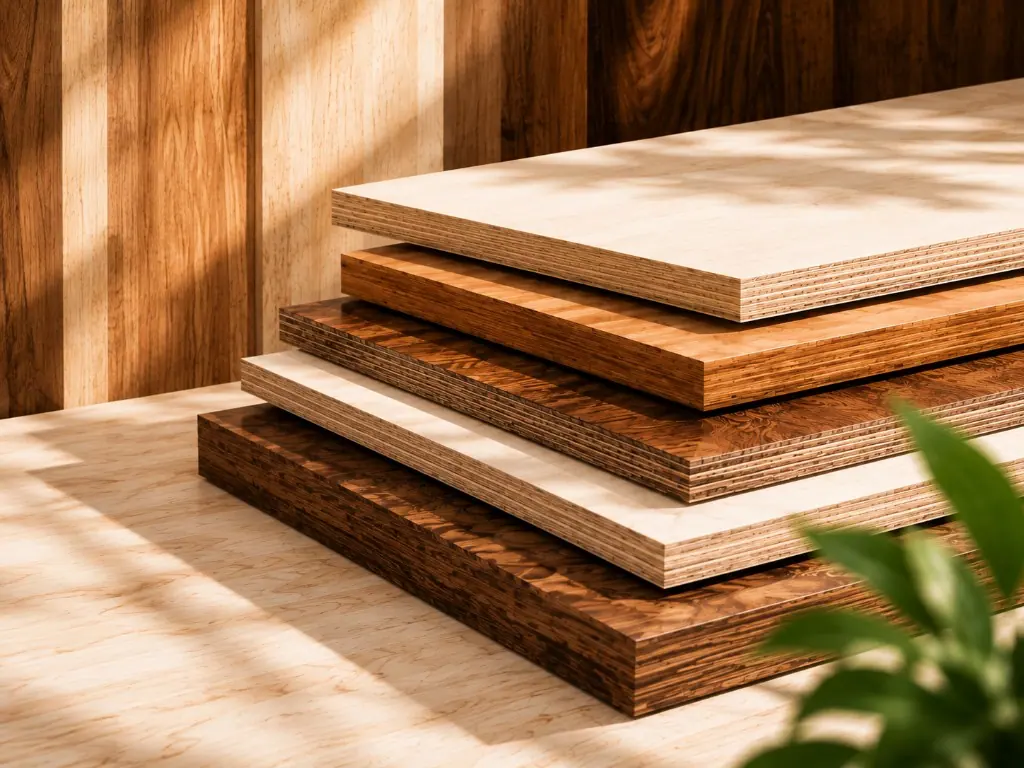
Decks, balconies, sit-outs and garden furniture face the toughest conditions in Kerala: months of rain, strong sun and termites. Many homeowners ask whether marine plywood is good enough outdoors, or whether WPC is worth it. Here is a direct comparison.
Is WPC or plywood better for outdoor decking?
| Factor | WPC | Plywood (incl. marine) |
|---|---|---|
| Water absorption | Zero | Absorbs through cut edges |
| Termites & rot | Immune | Treated grades resist, but exposed wood can decay |
| Sun & rain exposure | Suitable when exterior / UV rated | Cracks and weathers unless sealed |
| Maintenance | Wash occasionally | Re-seal or paint regularly |
| Stiffness & screw holding | Lower; needs closer supports | Higher |
| Best outdoor use | Open decks, balconies, garden furniture | Covered areas, sealed sub-floors |
Why does plywood fail outdoors?
Plywood is made of thin wood veneers glued in layers. Even when the glue is waterproof, as in IS 710 marine plywood, the wood itself absorbs water through cut edges and surface checks. Repeated wetting and drying in the sun makes veneers crack and lift. That is why plywood belongs in protected joinery, not on an open walking surface.
What should I check before buying WPC for a deck?
- Exterior rating – confirm the product is made for outdoor and UV exposure; interior WPC boards for cabinets are a different product.
- Support spacing – follow the manufacturer's maximum span between joists.
- Expansion gaps – leave the recommended gap at ends and edges for heat expansion.
- Fixings – use corrosion-resistant screws or concealed clips.
- Drainage – slope the base so water runs off instead of pooling.
Exterior WPC decking profiles and interior WPC boards are different products. Tell our team where the material will be used and we will confirm what suits your project and what is available.
Frequently Asked Questions
What are the differences between WPC boards and regular plywood for outdoor decking projects?
WPC is 100% waterproof and termite-proof, needs no painting and does not rot, so it suits open decks. Regular plywood absorbs water through its edges, swells and delaminates outdoors unless constantly sealed. Plywood is stiffer and holds screws better, but for exposed decking in Kerala, exterior-grade WPC lasts much longer.
Can marine plywood be used for outdoor decking?
Only in protected situations. Marine plywood (IS 710) has waterproof glue, but its wood veneers still weather, crack and absorb water at cut edges under sun and rain. It can be used under a roof or as a sealed sub-floor, but not as an exposed walking surface.
Does WPC fade in the sun?
Some colour change is normal over time. Choose a WPC product rated for UV exposure for open decks and balconies, as these include stabilisers that slow fading and surface damage.
Is WPC strong enough for a deck?
Yes, when installed correctly. WPC is more flexible than plywood, so it needs supports at closer spacing as recommended by the manufacturer, plus expansion gaps for heat. Follow the product's span and fixing guidelines.